
HUAWEI MatePad 12 X (2026) Review



The new nubia Music Pro is here and it sure breaks the norm in terms of smartphone design. Not to mention, it has this massive loudspeakers at the back in hopes to stand out in the budget space.

Yes, you heard that right, this phone belongs in the budget segment, and for a price under Php5,000, what else does it bring to the table? Let’s find out in this full review.
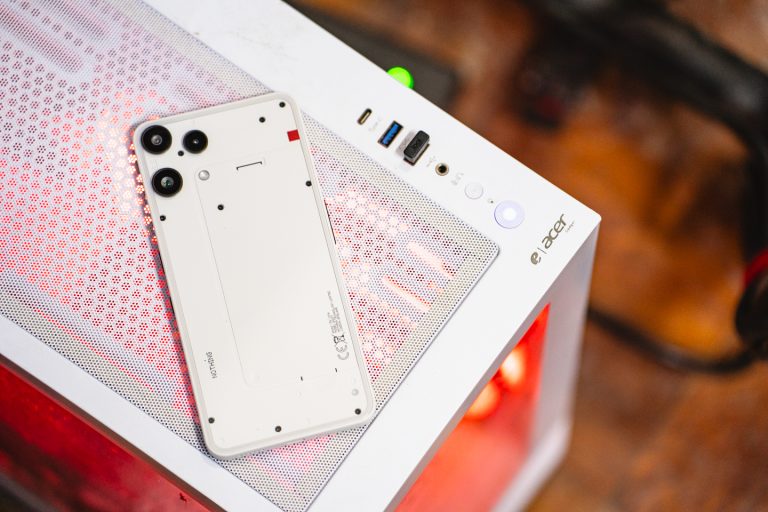
Starting with design, the nubia Music Pro absolutely screams for attention as a lot of things are happening at the rear.
Our unit is the Melody Wave variant and as the name implies, there are some decorative audio waves to see here that are rather loud and colorful. Perhaps, one of the first things you’ll notice is the prominent speaker grill, positioned beside the dual camera setup.

nubia calls it the “Vinyl Record” design and the notification LED lights enhance the effect, mimicking the look of a vinyl record player.
In terms of materials, the phone features an all-plastic build with a glossy back and sort of a matte frame that is flat on all sides. This combination makes it look and feel decent in hand, although those with small hands may find it a bit hefty.
For I/Os, there’s the orange accented power button beside the volume rocker on the right, the hybrid SIM tray is on the left, then there’s a mic on top. And found at the bottom are the 3.5 mm headphone jack, the second mic, USB-C, and the other downward-firing speakers.


Unlocking the phone is done through the side-mounted fingerprint sensor along with face unlock. As expected, the unlocking experience is quite fast using the fingerprint sensor, and that’s typically the preferred biometrics option for entry-level devices.

Flip the phone over, you’ll be greeted by a 6.7-inch HD+ IPS LCD panel with a refresh rate of up to 120Hz— at least on paper.
The bezels are quite thick especially at the chin, but that’s to be expected. I do have to commend nubia for not using an outdated water drop notch on this thing, instead it comes with the more standard punch hole notch.

When it comes to visual experience, it’s pretty decent. Colors are surprisingly rich and the viewing angles are quite good. The lack of detail is a given, supporting only Widevine L3— so streaming on YouTube is capped at 720p and Netflix quality is default to standard definition (SD).
Now, let’s talk about the very core feature of this phone and that is the audio listening experience. The nubia Music Pro features stereo speakers, and interestingly, the brand says it has three full-range speakers.

However, I only see the large speakers at the back and the downward-firing one at the bottom. I’m not sure where the third one is, but based on the image above, there’s a speaker at the top portion. So, that little hole at the top side might just be a speaker rather than a microphone, or both(?) The brand didn’t really specify.
Notably, the nubia Music Pro comes with a 2.1-channel audio system through the said three full-range speakers, reaching up to 95dB of sound. With DTS:X Ultra, it supports spatial audio for a more immersive listening experience, but those are just specs on paper, I’m afraid.

The actual audio experience is a little more serviceable than impressive. To be honest, I’m not expecting much quality out of this device, but I can appreciate the amount of loudness it can bring.
The highs is clear in general, though it tends to bleed over to the mids, and the overall sound fidelity is lacking in my taste. There’s little amount of bass here, too.
But then again, this is an entry-level device. Thus, having a sound system that is loud and is on a phone is quite a feat in itself, and for that, the nubia Music Pro deserves some credit.
In any case, you have the 3.5 mm headphone jack at your disposal, so you can still get some higher sound quality using your preferred wired audio wearable.
For optics, it features a 50-megapixel main shooter along with an auxiliary lens. While at the front, it has a 5-megapixel selfie shooter.

Images captured from the nubia Music Pro are not bad. The image quality has an adequate amount of sharpness with decent colors and dynamic range, though it tends to be on the warmer side in most cases.
As for video, it can shoot up to 1080p at 30 fps. However, the video quality looks mediocre with less sharp details, lots of grain, subpar dynamic range, and the lack of stabilization.
Despite the fact, in any case that you need to take some random snaps or whatnot, the nubia Music Pro’s decent camera performance will suffice.
On the subject of performance, since this is an entry-level phone, you may have to set your expectations.
Under the hood, the nubia Music Pro is equipped with the UNISOC Tiger T7200 chipset (a rebadged T606). It is built on a 12 nanometer process and has an octa-core CPU configuration, clocked at up to 1.6GHz.

For config, our unit comes with 4GB of on-board RAM with an additional 4GB of extended memory. It gets paired with 128GB of internal storage, and notably, it is expandable via a microSD card slot, which is always a plus in our book.
As expected of an entry-level chip, things are rather slow. It takes a while to load apps and multitasking is a bit of a struggle because of the limited memory.
Also, while it inherently supports a high refresh rate of 120Hz, the phone finds itself difficult to maintain at full speed. For the most part though, simple navigation on the home screen and app drawer, as well as scrolling on social media still yields a smooth experience.

Then, there’s gaming and the phone surprisingly holds up well. Casual games like Pokémon Unite ran smoothly without any noticeable stutters. But, that’s about it. Knowing that this is an entry-level device, it will surely struggle to play graphic-demanding games like Zenless Zone Zero let alone Wuthering Waves.
Well, that didn’t stop us from doing benchmark tests on the nubia Music Pro. See below the benchmark results that we got:
| Benchmark | nubia Music Pro |
| Chipset | UNISOC Tiger T7200 |
| AnTuTu V10 | 237,996 |
| AnTuTu Storage | 13,309 |
| S.Read Speed | 305.3 MB/s |
| S.Write Speed | 250.7 MB/s |
| 3DMark Wild Life | 431 | Avg. FPS: |
| Geekbench 6 CPU Single-Core | 392 |
| Geekbench 6 CPU Multi-Core | 1,365 |
| Geekbench 6 GPU OpenCL | 453 |
| Geekbench 6 GPU Vulkan | 454 |
| PCMark Work 3.0 performance | 8,517 |
| PCMark Work 3.0 battery life | 13 hrs & 44 mins |
On the software side of things, this guy runs on the older version of Android: specifically, Android 14 with MyOS 14 skin on top.

The overall UI design looks alright, though the system animations could use some improvements. There’s also a fair amount of bloatware, most of which is removable.

Unfortunately, nubia hasn’t mentioned anything about its software pledge. But they generally provide at least one major OS upgrade and up to three years of security patches.

Since this is an audio focused device, there are some specific features available like NFC tap-to-share your music to other compatible device. And you can even use the device itself as a Bluetooth speaker, should you need a louder audio.

Battery-wise, the nubia Music Pro packs a standard 5000mAh unit, but there’s no specifics for its charging capability.
In our experience, the phone managed to last at least half a day of use on typical usage including extended periods of listening to music.

For our PCMark battery life test, the phone lasted 13 hours and 44 minutes. That’s a solid runtime for this phone, as it should be, since it doesn’t have much to work with given its entry-level performance.

For connectivity, it gets 4G LTE, dual-band Wi-Fi, NFC— which comes as a surprise— and of course, FM radio since it features the good ol’ 3.5 mm headphone jack.
Finally, let’s talk about the price. The nubia Music Pro has an introductory price of PHP 4,299 (4GB + 128GB).
For its price, this phone brings a lot of interesting features to the table, especially if you’re looking for something that stands out in the budget segment. It’s not your run-of-the-mill entry-level device— but nubia has put a lot of emphasis on the audio experience, which is a rare sight in this price range.

The loud stereo speakers, with a claimed 2.1-channel audio system and DTS:X Ultra support, are a definite highlight. Plus, the 120Hz refresh rate display gives a smooth experience when browsing or scrolling through apps, something that many entry-level phones still lack.
However, while it does check off some impressive boxes, there are areas where it shows its budget roots. The performance, for instance, is decent and just enough to get by. The UNISOC Tiger T7200 chipset isn’t exactly known for pushing high-end performance, and multitasking can be a bit of a chore.

Gaming, too, is limited to lighter titles. If you’re looking for high-end gaming performance, you’ll need to look elsewhere.
The camera setup is perfectly serviceable for everyday use. And while the 5000mAh battery delivers decent endurance, the charging speeds and battery performance might leave you longing for more, especially if you’re someone who tends to consume a lot of media or play games.
Still, for PHP 4,299, the nubia Music Pro punches well enough in its class. If you’re a music enthusiast, appreciate a smooth display, and want an affordable phone with a bit more flair, this is surely a contender.
What we liked:
What we didn’t like:
nubia Music Pro specs:
6.7-inch HD+ IPS LCD
1600 x 720 pixels, 120Hz refresh rate
UNISOC Tiger T7200 (12nm) SoC
Octa-core, up to 1.6GHz
4GB RAM (+4GB extended memory)
128GB storage
Expandable via microSD (hybrid slot)
Dual rear cameras:
– 50MP f/1.8 main
– Auxiliary lens
5MP selfie shooter (punch hole notch)
Dual nano-SIM
4G LTE
Wi-Fi 5
Bluetooth
GPS
USB Type-C
3.5mm headphone jack
NFC
Side-mounted fingerprint sensor, face unlock
Melody Light LED notifications, loudspeakers (600% volume)
MyOS 14 (Android 14)
5000mAh battery
Melody Wave, POP Art (colorways)






Apple, Asus, Cherry Mobile, Huawei, LG, Nokia, Oppo, Samsung, Sony, Vivo, Xiaomi, Lenovo, Infinix Mobile, Pocophone, Honor, iPhone, OnePlus, Tecno, Realme, HTC, Gionee, Kata, IQ00, Redmi, Razer, CloudFone, Motorola, Panasonic, TCL, Wiko
Best Android smartphones between PHP 20,000 - 25,000
Smartphones under PHP 10,000 in the Philippines
Smartphones under PHP 12K Philippines
Best smartphones for kids under PHP 7,000
Smartphones under PHP 15,000 in the Philippines
Best Android smartphones between PHP 15,000 - 20,000
Smartphones under PHP 20,000 in the Philippines
Most affordable 5G phones in the Philippines under PHP 20K
5G smartphones in the Philippines under PHP 16K


