
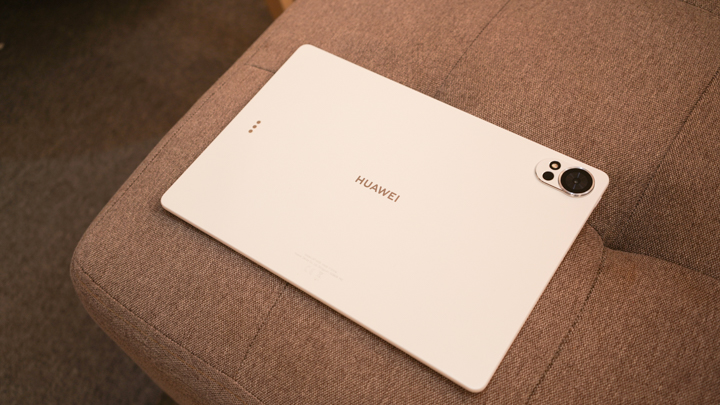
HUAWEI MatePad 12 X (2026) Review



Huawei is reportedly preparing to take another major step in its comeback strategy by entering 3nm chip production by 2026, according to industry insiders. The move would mark a significant technological leap for the company and China’s semiconductor sector, especially given the long-standing U.S. restrictions that have cut Huawei off from advanced chip manufacturing tools and foundries.

Despite ongoing challenges, Huawei has made impressive progress with its in-house chip development arm, HiSilicon, and through partnerships with SMIC (Semiconductor Manufacturing International Corporation), China’s leading semiconductor foundry. While SMIC is still operating without access to cutting-edge EUV (extreme ultraviolet) lithography machines due to U.S. export controls, the company is rumored to be using innovative DUV (deep ultraviolet) techniques and multi-patterning strategies to push manufacturing nodes forward.
Sources suggest that Huawei and SMIC are laying the groundwork to begin production of 3nm-class chips by 2026, following the reported success of their 7nm and 5nm chip developments in limited batches. The production may not match the yields or efficiency of chips made by industry leaders like TSMC or Samsung, but it signals a bold technological ambition and the possibility of homegrown alternatives in China’s tech stack.
This reported development comes after Huawei surprised the global tech industry in 2023 and 2024 by launching new smartphones—like the Mate 60 series—powered by the Kirin 9000S, a 7nm chip reportedly produced under U.S. sanctions. Despite skepticism about performance parity and production volumes, it marked Huawei’s re-entry into advanced chipmaking.
If Huawei and SMIC can indeed achieve even partial success at the 3nm level, it would be a symbolic and strategic milestone—not just for Huawei, but for China’s broader push toward semiconductor self-sufficiency.
Huawei has not officially confirmed the 3nm timeline, and industry analysts remain cautious about the feasibility given global supply chain complexities and equipment restrictions. Still, the ambition points to a clear direction: Huawei is betting big on catching up to global chip leaders, using whatever means are technically—and politically—possible.






Apple, Asus, Cherry Mobile, Huawei, LG, Nokia, Oppo, Samsung, Sony, Vivo, Xiaomi, Lenovo, Infinix Mobile, Pocophone, Honor, iPhone, OnePlus, Tecno, Realme, HTC, Gionee, Kata, IQ00, Redmi, Razer, CloudFone, Motorola, Panasonic, TCL, Wiko
Best Android smartphones between PHP 20,000 - 25,000
Smartphones under PHP 10,000 in the Philippines
Smartphones under PHP 12K Philippines
Best smartphones for kids under PHP 7,000
Smartphones under PHP 15,000 in the Philippines
Best Android smartphones between PHP 15,000 - 20,000
Smartphones under PHP 20,000 in the Philippines
Most affordable 5G phones in the Philippines under PHP 20K
5G smartphones in the Philippines under PHP 16K


