

您可能已经注意到,智能手机制造商在新产品的设计上正进行大幅度的改变。除了搭载更强大的内部硬件外,它们现在拥有更大的屏幕、更纤薄的边框以及超过两颗摄像头。虽然我们可以将这些改进归因于增加硬件,但去除部分硬件同样起着重要作用。
实体键盘的移除

几十年前,实体键盘是手机的标配。BlackBerry 以其 QWERTY 键盘闻名,而 Nokia 也不遑多让,采用 T9 输入法。我们甚至以可更换的键盘和背光改装为荣。然而,Apple 在 2007 年推出 iPhone,配备多点触控屏和虚拟键盘后,这一切改变了。自此,除 BlackBerry 外,智能手机厂商基本上都放弃了实体键盘。
用户可更换电池的移除

当时用户可更换电池是常态,这实际上是一项安全且便利的功能,因为它让用户在电池老化或出现故障时能够轻松更换或交换电池。现在我们使用的是不可更换/不可拆卸的电池,这带来了诸如更轻薄的一体化设计等优势。市场上仍有可拆卸电池的智能手机,例如 LG G5,但其余大多数都是入门级机型。
取消微型 USB

Micro USB 仍然是您在智能手机上最常见的接口之一,但它正面临被更便捷的 USB Type‑C 取代的危险。即使是入门级的 Cherry Mobile Flare S6 也采用了这种新型 USB 接口。也就是说,我们可能会在不久的将来看到更多设备放弃旧的 Micro USB,转而使用更新的 USB‑C。
移除3.5mm音频端口

Smartphone makers are removing the 3.5mm audio port in their devices just like what Apple did with the iPhone 7 and 7 Plus. Although this has annoyed users who prefer listening to their tunes through a wired connection, it didn't stop other manufacturers to follow suit, just like Google and their recently launched Pixel 2 and Pixel 2 XL. Removing the 3.5mm audio part has its advantages like allowing manufacturers to further slim down their devices, or for easier water and dust proofing. In addition, more users are moving towards wireless connectivity when it comes to playing audio as it is more convenient and less of a mess to use.
The removal of the earpiece

Although something we don't see happening anytime soon, Xiaomi proved with the Mi Mix that they can remove the traditional earpiece that lets you listen to calls and replace it with something else - a cantilever piezoelectric ceramics acoustic technology. According to Xiaomi, the ceramic drive unit converts electric signals into mechanical energy. Then this mechanical energy creates microseismic waves, causing resonance in the phone metal frame, and converts into sound waves delivered straight to the ear. Seems like overkill considering an ordinary earpiece will do the trick but this allowed Xiaomi to implement a full display design on the Mi Mix.
The removal of bezels

Speaking of displays, the bezels is one of the features of a smartphone that manufacturers have been trying to remove for quite a while now. Samsung started with one side with the Samsung Galaxy Note Edge in 2014 by removing the bezel on one side. In 2015, Sharp released the Aquos Crystal 2 with a bezel-less display. In 2016, Xiaomi did the same with the Xiaomi Mi Mix. 2017 brought more smartphones with slim bezels, like the Samsung Galaxy S8 and S8 Plus, LG G6, LG V30, Apple iPhone X, Xiaomi Mi Mix 2, Vivo V7+, and OPPO F5. Just imagine what next year will bring as manufacturers literally push the boundaries in smartphone display technology.
The removal of fingerprint scanners

It's hard to imagine Apple without its Touch ID fingerprint scanner, but that's exactly what happened when they released the iPhone X. The front of the device is all screen except for that small portion at the top for the earpiece, camera, and sensors. Obviously, there's no room for the Touch ID on the front, and instead of placing it at the back like most Android smartphones, Apple decided to remove it entirely and replaced it with a newer tech - the Face ID. While face recognition has been around for a while now in some Android smartphones it was but a secondary option to the fingerprint scanner. Apple's bravado has proven that even a reliable biometric security such as the fingerprint, can be replaced.
What's next on the chopping board?
We can only guess. It could be wired connections considering the move towards wireless, whether it is audio streaming, charging, or file transfer. Or the total elimination of bezels. But at least we now have an idea what influences smartphone innovation. If we want more new features on a mobile device, old features have to be removed. Out with the old, in with the new, right?




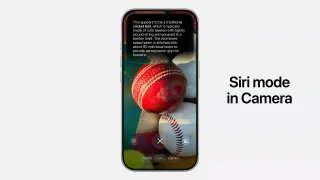
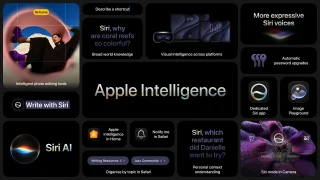
Virtual assistants like Bixby and Siri. I believe smartphone makers shall be investing on enhancing them, as these assistants will become smarter in the coming years.