

RIM showed to members of the media a preview of the BlackBerry Playbook OS 2.0. And while we wait in the next two weeks for the OS update to roll out to devices, we’ve got some alone time to play with it.
RIM has done a lot of improvements on the Playbook OS to make it more usable this time (I bought a BB Playbook a couple of weeks ago to prepare for OS 2.0).

One of the major adjustments they made is to add a native Email app, Calendar App and Contacts list. These apps were previously deactivated when you’re not “bridged” to a BlackBerry handset and was the single biggest issue a lot of Playbook users were complaining about. BBM will still not run on the Playbook as well as SMS synching (RIM has taken note of the latter).
RIM has also upgraded Documents to Go to Premium version so you can use the tablet more for productivity (more on this later on) and editing documents on the go.

Android Apps will finally be available on the Playbook. This will be the main attraction for people to finally get one.
The Playbook OS 2.0 will finally support Android apps via a port. RIM is currently working with Android Developers to port their apps over to the BlackBerry App World. They could not say how many apps or developers have already committed to do so but I guess it will be in the thousands. They also recently launched an “App for a Playbook” campaign to encourage more developers to make the move.
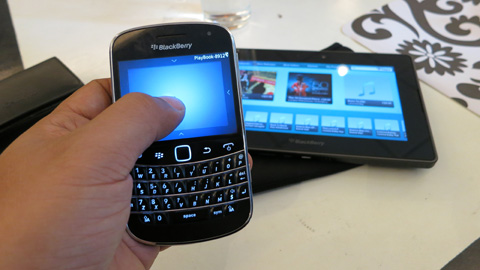
RIM has also improved and added more features on the use of the BlackBerry Bridge. With OS 2.0, you can now use your BB handset to remotely control your Playbook (he handset may be used as some sort of wireless presenter while the tablet is hooked up to a monitor, HDTV or a projector). Here’s a quick demo I uploaded on YouTube.
Reps from RIM would not exactly say when will the global roll-out would be but promises it will be before end of February (which is like in the next 2 weeks). My guess it that they’ll put it out during the Mobile World Congress on the 27th.


Gen – X: Graduates of the Cube – War Terrorist Training Camps.
The Washington Post and the New York Times are socially (and, to a lesser extent, economically)
liberal, while Wall Street Journal editorials thunder with conservatism; other publications line up at
various points along the ideological continuum or continua” (21). I would therefore suggest you discuss this material at a sensible time.