

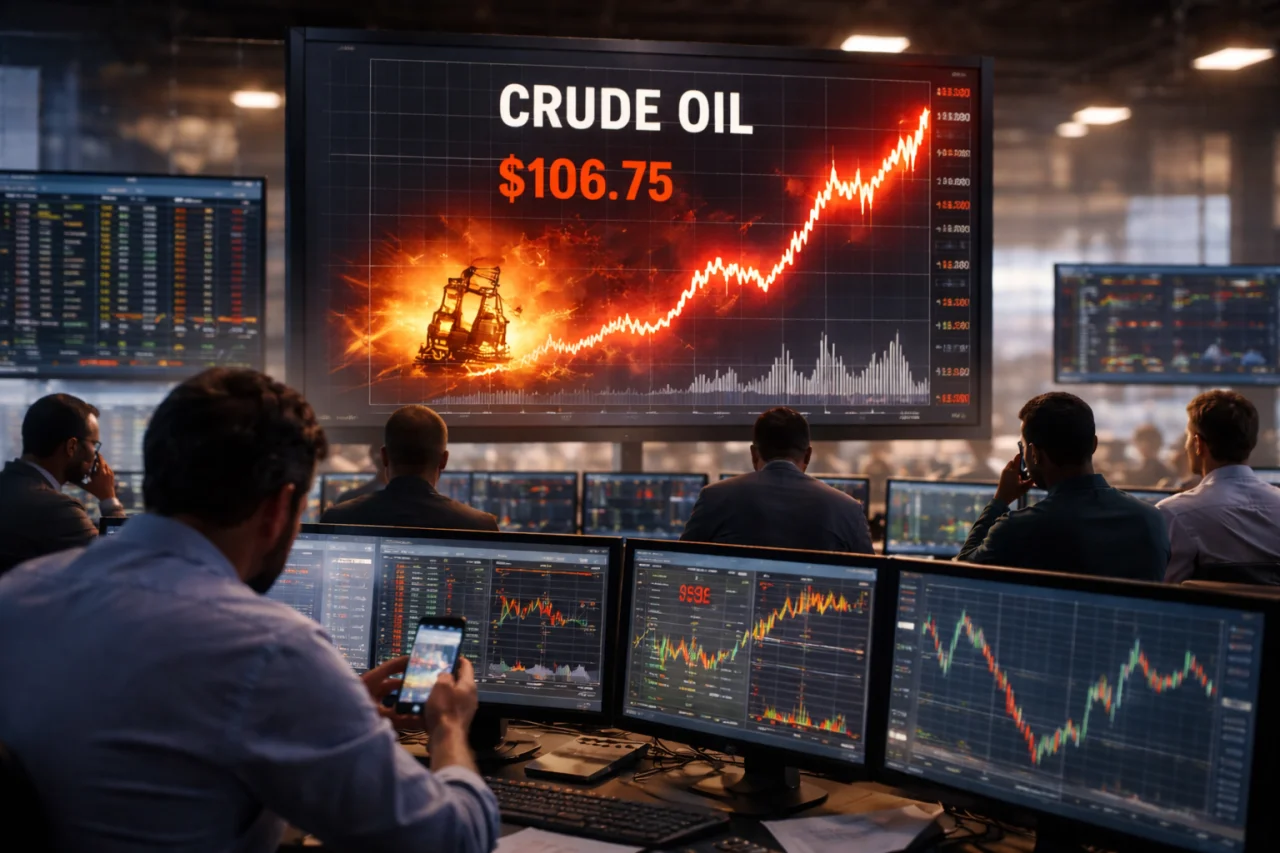
 For oil traders, this week has brought a familiar warning. As a result of escalating tensions in the Middle East, crude oil prices have again leapt, and the commodity markets are in their familiar state of torpor – at the centre of a maelstrom of buying and selling, with nervous investors fretting over any further deterioration in supply from the most strategic waterway for oil in the world. It is a predictably sudden and volatile market reaction to the unfolding of an almost inevitably volatile situation in a globally crucial area – a market that is inextricably entwined with the equally critical commodity markets that dominate such huge tracts of the global economy.
Much of the focus has been on the potential impact on the Strait of Hormuz. The Strait of Hormuz is a 54-mile-wide (87 km) channel at the bottom of the Gulf, through which about a fifth of the world’s oil is shipped every day. Market reaction is immediate in the event of an escalation of hostilities in the region, as even a small incident has the potential to impact shipping routes and energy exports. This week, the threat of potential supply disruptions pushed benchmark crude prices to their highest level in several months. For traders watching the surge through real-time platforms such as MT5, the rapid price movement was another reminder of how closely geopolitics and digital trading tools are now connected.
For years energy markets have been known to be volatile in response to geopolitical events. But the rate at which the market responds to these events has changed dramatically over the last decade. What used to be a television announcement that would then be relayed and discussed through terminal screens on the trading floor is now simply a social media update that becomes immediately available in real time through data feeds to millions of retail traders working from home and using laptops and mobiles. The market charts update second by second, alert notifications are sent out in real time and traders receive breaking news as it occurs.
Market conditions are slowly changing, and the reactions to significant market events such as the recent rise in oil prices are different from what they were in the past. Until recently, the main group of people who reacted to changes in commodity prices were traders at hedge funds and investment banks. Now, however, retail traders are just as aware of price shocks as institutional traders, and with the increasing number of online trading platforms covering an ever-widening range of trading products, retail traders are more directly connected to the markets.
Almost all trading websites allow users to compare commodities, currencies and indices. Although there are many programs and applications available, many online traders use MetaTrader 5 (MT5), often simply called mt5. It is provided by MetaQuotes Software and includes various technical analysis tools, automated trading robots and even an economic calendar, allowing traders to monitor the movements of oil and other prices in real time.
When markets are volatile, a large number of trading tools spring into action. An oil price spike rarely has any lasting impact on the share prices of oil and gas companies. However, movements in oil prices can have an impact on currency markets. An increase in oil prices can strengthen the currencies of oil-producing countries, and changes in oil prices can also influence investor perceptions of inflation, which in turn can affect stock markets. Traders often use technical analysis software to monitor the relationships between different markets.
Oil price movements attract immediate headlines because of the enormous role oil plays in the global economy. When crude prices rise, they tend to feed through into petrol and diesel prices and increase production costs across a wide range of industries. That is why oil price movements are often viewed as an indicator of future inflation pressures or an early sign of an economic shock. When such rises are sharp, they can rapidly trigger revisions to growth forecasts and monetary policy expectations.
Volatility is often viewed negatively, but it is not always bad for traders. In fact, it can be beneficial for short-term traders. Large movements in markets create opportunities to trade momentum and also allow longer-term investors to assess the impact that rising or falling prices may have on real economic activity. In more stable markets, traders and investors used to react some time after the event they were responding to – sometimes hours, sometimes days. Now, in this more instantaneous age, they react almost immediately through minute-by-minute buying and selling activity.
Markets have certainly come a long way from the old days of trading floors. Technology is one factor that has dramatically influenced the shift in the structure of markets. Ten years ago, trading software often consisted of simple desktop applications used primarily by professional brokers and traders. Today, technology has advanced to the point where many modern trading platforms have migrated to mobile environments and are capable of performing a wide range of functions that once took hours to complete, now executed instantly with a single click. Real-time charts, market alerts and automated indicators are just some of the tools designed to make market analysis faster and more efficient.
Financial news also travels far faster than it once did. When a major development in commodity prices occurs, such as a sudden drop in crude oil prices, trading apps, online forums and market platforms quickly fill with push notifications and discussions. Traders begin sharing charts showing what may have caused the move, speculating about whether the commodity market will face shortages or surpluses, and forecasting how oil prices may affect foreign exchange and equity markets. Technology allows traders to share and discuss market observations almost instantly.
There has been much discussion in the technology media about the relationship between geopolitics and financial markets. Events that once reached people only through traditional news channels now appear instantly in personal data streams. Political tensions and natural disasters that once felt distant can now seem as though they are unfolding in real time before traders’ eyes. Energy prices have become just another set of data points on the screen, monitored alongside stock prices, foreign exchange rates and cryptocurrency values.
The growing number of retail traders suggests that a major trend is underway in the financial technology industry. The increasing ease with which individuals can trade shares, derivatives or currencies online, combined with the expanding range of analytical tools available, indicates that technology companies have discovered a vast new customer base. A global market shaped by large numbers of retail traders may also become more volatile, as emotional reactions sometimes drive price movements alongside traditional economic analysis.
The recent oil price surge illustrates how markets have evolved. An increase in crude prices triggered by political events is no longer something observed only by energy ministries or institutional trading desks. Instead, it plays out on the screens of thousands of individual investors who constantly monitor charts, compare signals and discuss the possible impact of the next headline.
The latest oil shock therefore reflects more than developments in the energy sector. It also highlights the growing role of financial technology in shaping how markets operate. Events unfolding in distant parts of the world are now connected to digital platforms that allow traders to react instantly. As technology continues to evolve, the link between geopolitics, market movements and the tools traders use will likely become even stronger.






0 Comments
Leave a Reply