
The Department of Transportation (DOTr) has rejected proposals to allow carpooling vehicles coordinated through ride-sharing and mobility apps on the EDSA Busway, citing concerns that opening the dedicated lane to private vehicles would degrade the performance of Metro Manila’s primary mass transit corridor.
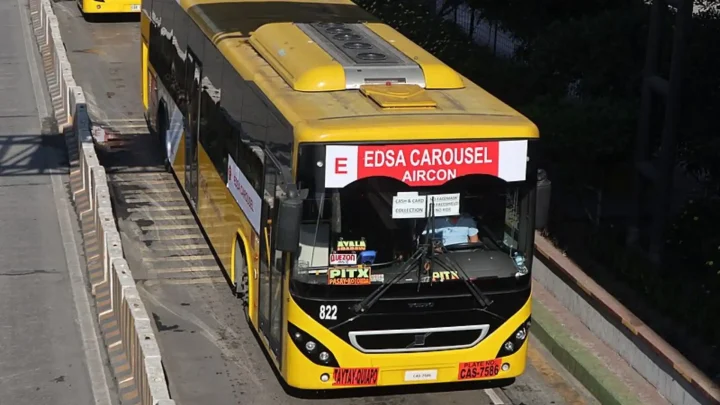
Transportation Secretary Giovanni “Banoy” Lopez said the EDSA Busway was designed as a high-capacity people-moving system, not a shared roadway for private vehicles even those carrying multiple passengers. The lane currently enables uninterrupted bus operations that move up to 300,000 commuters daily, a level of efficiency that private cars, regardless of occupancy, cannot replicate.
From a transport technology standpoint, the Busway operates like a full-scale Bus Rapid Transit (BRT) system. Its effectiveness depends on lane exclusivity, predictable vehicle behavior, and consistent scheduling, conditions that are critical for maintaining throughput, minimizing delays, and enabling system-level optimization. Introducing private vehicles, even via carpooling apps, would introduce variability that could slow down buses and disrupt traffic flow models.
DOTr officials emphasized that while carpooling platforms are often promoted as smart mobility solutions, they function best on general road networks, not on dedicated transit corridors. In terms of people-per-lane efficiency, buses far outperform carpooling vehicles. A single articulated bus can move the equivalent of dozens of private cars while occupying the same amount of road space.
Allowing carpooling vehicles on the Busway would also undermine future technology upgrades planned for the corridor. These include AI-assisted traffic management, automated bus dispatching, real-time performance monitoring, and deeper integration with contactless fare systems and commuter data platforms. Officials warned that mixing private vehicles into the lane would complicate system optimization and slow progress toward a smarter, more predictable transport network.
Several transport and mobility groups have backed the DOTr’s position, noting that the Busway’s success is rooted in its exclusivity. Operators warned that opening the lane, even partially could return EDSA to pre-Busway congestion levels, negatively affecting both commuters and operators.
Despite the firm rejection, the DOTr said it remains open to collaborating with the Metropolitan Manila Development Authority (MMDA), technology providers, and civil society to explore data-driven traffic solutions elsewhere in Metro Manila. However, Lopez stressed that any innovation must align with a commuter-first, mass-transit-oriented framework.
“The goal of transport technology is not to move more cars,” Lopez said. “It’s to move more people—efficiently, reliably, and at scale.”



0 Comments
Leave a Reply