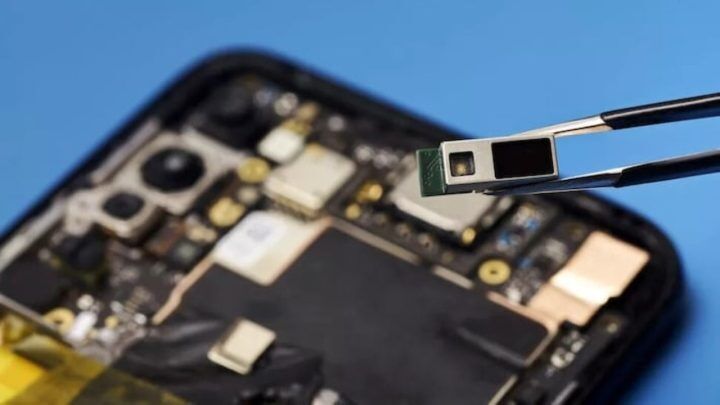

The entity behind the Wi-Fi 802.11 standards—Institute of Electrical and Electronics Engineers (IEEE)—has released the 802.11bb as its latest global light-based communications standard. Li-Fi is a wireless technology that uses light, instead of radio frequencies, to transmit data. How it works By utilizing the light spectrum, Li-Fi can provide ‘faster’ and ‘more reliable’ wireless connectivity that is more secure than conventional technologies like WiFi and 5G. As of June 2023, the IEEE 802.11 recognizes wireless light communications (LC) as a physical layer for wireless local area networks. https://youtu.be/kDqA1-ldTOI The Fraunhofer HHI video demonstrates a Li-Fi system that utilizes a building's lighting infrastructure for data transmission. One, is that its sensitivity to lighting conditions can vary significantly, and it is easy to accidentally cut off a line-of-sight connection. Another disadvantage is its limited range, as the light is stationary and confined to a specific line of sight. One of the major players in the Li-Fi industry, pureLiFi, has already developed the Light Antenna ONE module, which is 14.5mm component for LC and is currently being offered to OEMs for evaluation. Read more in our articles including "IEEE adds 802.11bb 'Li-Fi' wireless standard, uses light to transmit up to 9.6Gbps data" and "PH among slowest countries in shift away from 3G".
The entity behind the Wi-Fi 802.11 standards—Institute of Electrical and Electronics Engineers (IEEE)—has released the…
Jul 15, 2023
The Philippines remains among the slowest countries in transitioning away from 3G networks, with most…
Jun 2, 2026
Inflation is now (May 2026) at 7.2%, electricity rates at Php14.33/kWhr, and gas prices through…
May 28, 2026
Not long ago, the Philippines have always been reported as among having the slowest internet…
May 28, 2026
Smart Communications, Inc. and TNT are providing free Facebook access through selected prepaid, home, and…
May 26, 2026
Globe introduced new AI, cloud, and connectivity products during its “The Blueprint” media briefing on…
May 26, 2026The entity behind the Wi-Fi 802.11 standards—Institute of Electrical and Electronics Engineers (IEEE)—has released the 802.11bb as its latest global light-based communications standard. Li-Fi is a wireless technology that uses light, instead of radio frequencies, to transmit data.
How it works By utilizing the light spectrum, Li-Fi can provide ‘faster’ and ‘more reliable’ wireless connectivity that is more secure than conventional technologies like WiFi and 5G. As of June 2023, the IEEE 802.11 recognizes wireless light communications (LC) as a physical layer for wireless local area networks. https://youtu.be/kDqA1-ldTOI The Fraunhofer HHI video demonstrates a Li-Fi system that utilizes a building's lighting infrastructure for data transmission.
Our coverage of light transmission includes: "IEEE adds 802.11bb 'Li-Fi' wireless standard, uses light to transmit up to 9.6Gbps data"; "PH among slowest countries in shift away from 3G"; "Which Fiber Prepaid Service Should You Get in 2026?". Each article provides unique insights and information.