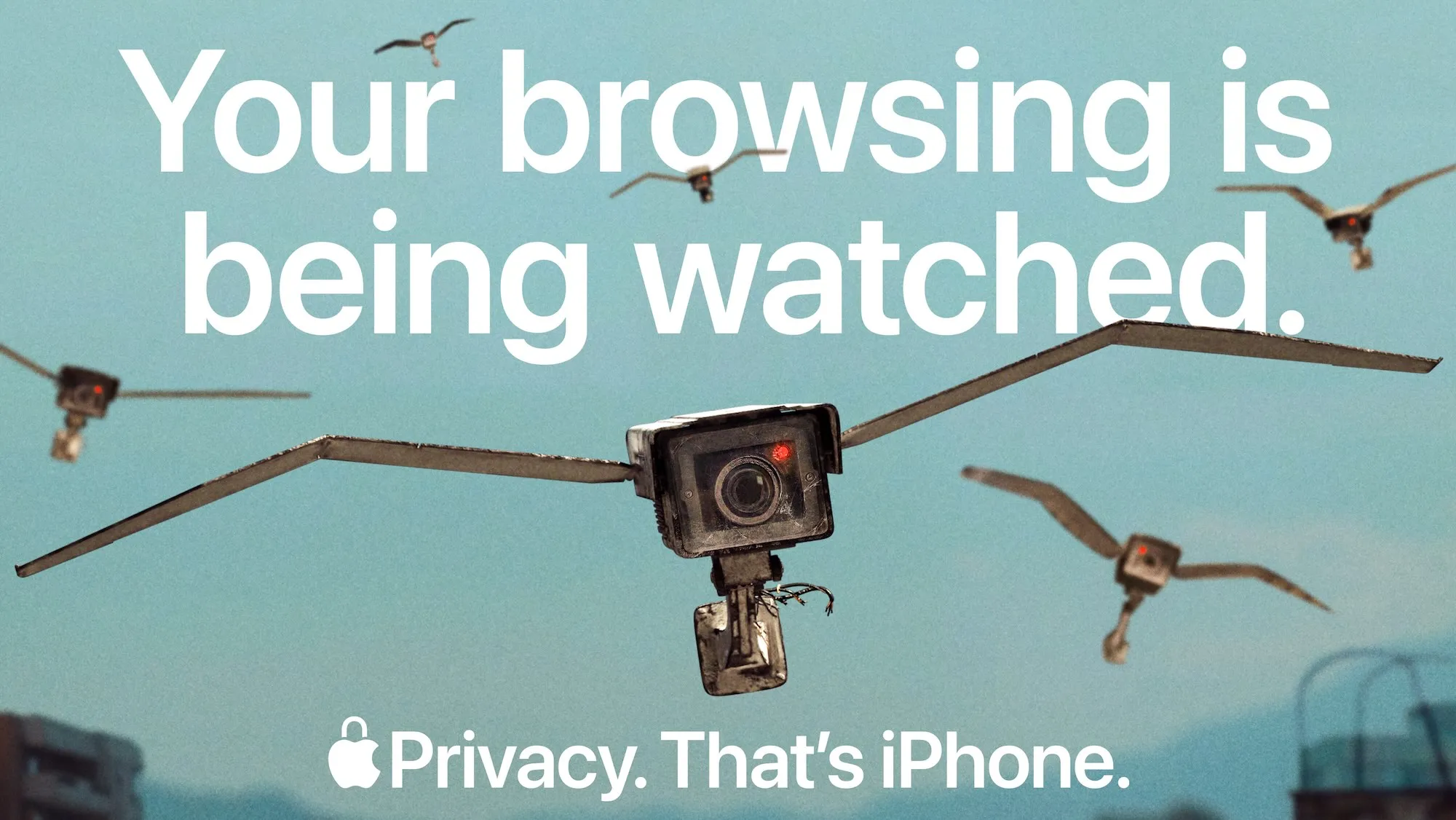

A viral wave of headlines over the weekend claimed Apple was urging iPhone users to delete Google Chrome “immediately.” The buzz stemmed from a resurfaced New York Post article and took off across social media. What’s being mistaken for a warning is a cleverly pointed piece of advertising by Apple—one that has resurfaced due to a timely shift in Google’s Chrome strategy. Last year, Apple launched a Safari campaign with the tagline: “Your browsing is being watched.” In the campaign’s featured video titled “Flock,” Apple used animated surveillance drones and winged security cameras to depict what it claimed was the data-tracking behavior of other browsers, namely Google Chrome. Just days after Apple’s ad aired last year, Google had proposed changes aimed at limiting third-party tracking cookies in Chrome—a gesture seemingly aligned with Apple’s privacy-forward messaging. But this past week, Google quietly walked back those changes, stating that it would not roll out a new standalone prompt for third-party cookie permissions after all. Google Search is still the default engine in Safari, and there’s no practical or official scenario in which Apple would issue a direct warning to delete Chrome from iPhones. With Google backpedaling on Chrome privacy updates, Apple may very well seize the opportunity to refresh its Safari campaign. Read more in our articles including "Apple’s Quiet Campaign Against Chrome Gets Loud Again, Thanks to Google" and "Google Chrome expands Autofill with Google Wallet integration".

A viral wave of headlines over the weekend claimed Apple was urging iPhone users to…
Apr 30, 2025
Google has announced new updates to Chrome Autofill. With this feature, it brings support for…
Jun 24, 2026
Google has introduced new AI-powered pointer features that let users interact with Google Gemini more…
May 14, 2026
Google has announced a new set of AI-powered features for Google Chrome. Powered by Gemini…
Apr 25, 2026
Google is expanding its AI-powered Gemini experience in Chrome to more users across the Asia…
Apr 21, 2026
Google Chrome has announced new upgrades to its AI Mode. With the update, clicking a…
Apr 17, 2026A viral wave of headlines over the weekend claimed Apple was urging iPhone users to delete Google Chrome “immediately.” The buzz stemmed from a resurfaced New York Post article and took off across social media. What’s being mistaken for a warning is a cleverly pointed piece of advertising by Apple—one that has resurfaced due to a timely shift in Google’s Chrome strategy.
Last year, Apple launched a Safari campaign with the tagline: “Your browsing is being watched.” In the campaign’s featured video titled “Flock,” Apple used animated surveillance drones and winged security cameras to depict what it claimed was the data-tracking behavior of other browsers, namely Google Chrome. Just days after Apple’s ad aired last year, Google had proposed changes aimed at limiting third-party tracking cookies in Chrome—a gesture seemingly aligned with Apple’s privacy-forward messaging. But this past week, Google quietly walked back those changes, stating that it would not roll out a new standalone prompt for third-party cookie permissions after all.
Our coverage of Google Chrome third-party cookies includes: "Apple’s Quiet Campaign Against Chrome Gets Loud Again, Thanks to Google"; "Google Chrome expands Autofill with Google Wallet integration"; "Google unveils AI-powered pointer for Chrome". Each article provides unique insights and information.