

The Supreme Court has ruled that photos and messages from Facebook Messenger or other social media platforms obtained by private individuals are now admissible as evidence in court proceedings. Cadajas to life imprisonment for the violation of RA 9775 or the Anti-Child Pornography Act due to coercion of a 14-year old girl into sending photos of her private parts over Facebook Messenger. It was stated that the mother of the minor forced her into opening the petitioner's Facebook Messenger account in obtaining a copy of the conversation after the female minor had deleted hers. By giving the password and access to his Facebook Messenger account to the female minor, the petitioner had lost the reasonable expectation of privacy over the contents of his account to whoever it was given access to and to whoever it may be revealed. The Supreme Court had also discussed that the restrictions of the Data Privacy Act (DPA) are not applicable due to the fact that the DPA allows the processing of personal information where it relates to the determination of criminal liability of a data subject. Meta has announced new updates to its Teen Accounts program, expanding safety features for young users across Facebook, Instagram, and Messenger. Read more in our articles including "Photos, messages obtained from social media can be used as evidence –Supreme Court ruling" and "Meta strengthens teen protections across Facebook, Instagram, and Messenger".
The Supreme Court has ruled that photos and messages from Facebook Messenger or other social…
Jun 19, 2022
Meta has announced new updates to its Teen Accounts program, expanding safety features for young…
Jun 19, 2026
Supreme Court of the Philippines has approved a new framework governing the use of artificial…
Mar 22, 2026
Last Thursday, June 19, 2025, the Supreme Court of the Philippines formally launched the eCourt…
Jun 22, 2025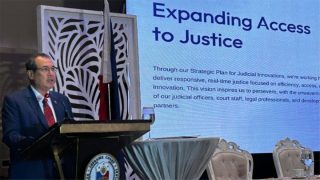
The Supreme Court (SC) has begun pilot testing of AI software in select first and…
Nov 30, 2024
As per an article on Inquirer, the Philippine Supreme Court (SC) is looking to leverage…
Sep 23, 2024The Supreme Court has ruled that photos and messages from Facebook Messenger or other social media platforms obtained by private individuals are now admissible as evidence in court proceedings. Cadajas to life imprisonment for the violation of RA 9775 or the Anti-Child Pornography Act due to coercion of a 14-year old girl into sending photos of her private parts over Facebook Messenger.
It was stated that the mother of the minor forced her into opening the petitioner's Facebook Messenger account in obtaining a copy of the conversation after the female minor had deleted hers. By giving the password and access to his Facebook Messenger account to the female minor, the petitioner had lost the reasonable expectation of privacy over the contents of his account to whoever it was given access to and to whoever it may be revealed. The Supreme Court had also discussed that the restrictions of the Data Privacy Act (DPA) are not applicable due to the fact that the DPA allows the processing of personal information where it relates to the determination of criminal liability of a data subject.
Our coverage of Facebook Messenger Supreme Court includes: "Photos, messages obtained from social media can be used as evidence –Supreme Court ruling"; "Meta strengthens teen protections across Facebook, Instagram, and Messenger"; "Supreme Court approves AI guidelines for court use". Each article provides unique insights and information.