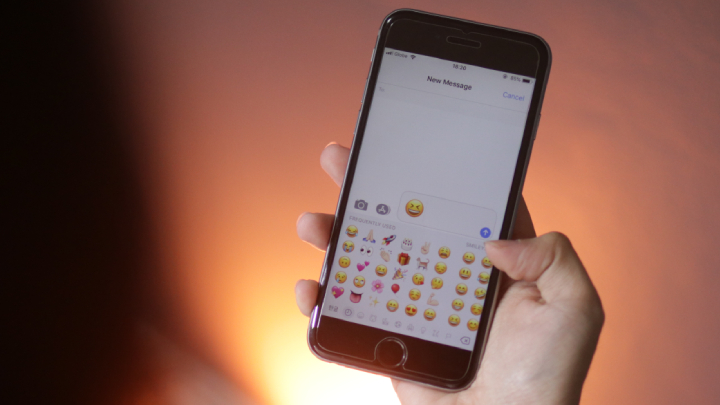

The use of emoji have become part of messaging culture but really, are people aware of their history? You’re probably thinking right now, aren’t emoji the same as emoticons? Emoji makes use of images and symbols rendered on devices while emoticons, on the other hand, are expressions created with keyboard characters. The emoji was first created in Japan by Shigetaka Kurita in 1998. According to an interview with The Guardian, Shigetaka Kurita was working in NTT DoCoMo and spent about two years crafting the first emoji for the company’s launch of i-mode, their mobile internet system. The word “emoji” is a combination of the Kanji “?” or “e” which means picture, and “??” or “moji” which means character. (The first emoji set via MoMa) In the interview, Kurita noted that “At first, there were about 200 emoji, for things like the weather, food and drink, and moods and feelings. Now there are well over 1,000 Unicode emoji.” Since the 200, 12x12-sized pixel emoji were too simple, DoCoMo wasn’t able to secure a copyright, and so, telecommunication companies in Japan began offering emoji as well. Read more in our articles including "The History of Emoji" and "New 67 possible emojis in 2018 revealed".

Majority of us use emoji in our everyday lives. They’re handy when you can’t express…
Feb 6, 2019
New emojis for smartphones are already in the works and is being decided by a…
Aug 5, 2017
We all know what an iPhone or iPad is, but very few of us actually…
Jun 5, 2016
The Philippines remains among the slowest countries in transitioning away from 3G networks, with most…
Jun 2, 2026
Inflation is now (May 2026) at 7.2%, electricity rates at Php14.33/kWhr, and gas prices through…
May 28, 2026
Not long ago, the Philippines have always been reported as among having the slowest internet…
May 28, 2026The use of emoji have become part of messaging culture but really, are people aware of their history? You’re probably thinking right now, aren’t emoji the same as emoticons?
Emoji makes use of images and symbols rendered on devices while emoticons, on the other hand, are expressions created with keyboard characters. The emoji was first created in Japan by Shigetaka Kurita in 1998. According to an interview with The Guardian, Shigetaka Kurita was working in NTT DoCoMo and spent about two years crafting the first emoji for the company’s launch of i-mode, their mobile internet system.
Our coverage of the history of emoji includes: "The History of Emoji"; "New 67 possible emojis in 2018 revealed"; "What does the 'i' stand for in iPhone and other Apple products?". Each article provides unique insights and information.