

One of the latest additions to the NXT lineup, the Sony Xperia Go is set to succeed the rugged Xperia Active which was released last year. Will this phone live up to the standards that it’s older brother has set? Check it out on our full review after the break.
Design and Construction
The Xperia Go is basically what you’ll get if you sandwiched the Xperia Active and Sola. It has the tough exterior of the Active and minimalist design of Sola. The 3.5†screen sits in between of the Active’s 3.0†and Sola’s 3.7†display.
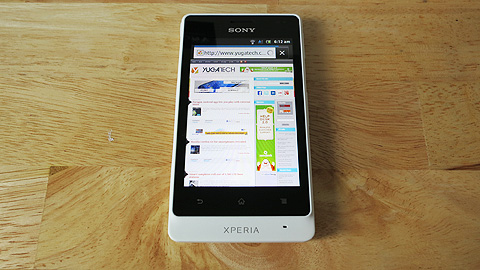
Despite its seemingly fragile appearance, the Xperia Go should be able to withstand some of natural elements. Just like the Xperia Active, this phone is IP67 certified meaning it’s dust and waterproof for up to a meter for 30mins. We submerged the device underwater numerous times and we were pretty pleased that it still functions as normal after being dunked in the pool.
Display & Multimedia
As mentioned above, there’s a half an inch revamp on this smartphone’s display as compared to Active but the screen resolution remained the same at 480×320, thus equating to a less dense display. But given the display’s poor resolution, it still provides a pretty decent viewing experience indoors. Outdoor legibility is also not so bad but not the best we’ve seen on a smartphone.
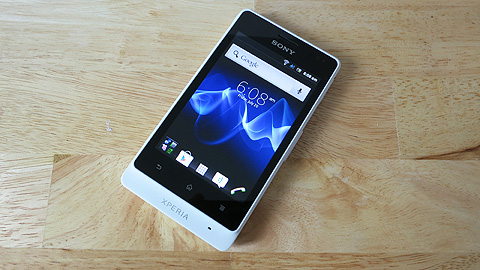
Speaking of display, the screen is actual pretty responsive even the user’s hands is moist or even damp. This is a definite plus for us, especially me because I have sweaty palms. As its older brother, the Xperia Go also boasts a scratch-resistant glass. But just like its bulkier counterpart, the display ceases to register touches when the phone is totally submerged.
We planned to do some crazy things with Xperia Go but we we’re a little bit squeamish to do it. Luckily some German bloggers have already done it for us. Here’s their video demo of how tough the Xperia Go is.
Not so surprisingly, the multimedia experience we had with the Xperia Go is pretty identical with the other Xperia smartphones that we’ve reviewed thanks to its Mobile Bravia Engine and xLOUD Sound Technology. You can read through our Xperia Sola review for a better idea about Sony’s proprietary audio and visual technology.
Unfortunately this smartphone inherits its predecessor’s audio issues. The sound coming out of the loudspeaker is too soft, so we suggest keeping an earphone handy for better multimedia experience.
OS and Performance
Just like the majority of its NXT siblings, the Xperia Go comes with Gingerbread out of the box with a heavily customized Timescape UI. If you want to know more about TimeScape UI, you can revisit our Sony Xperia S review here.
This smartphone is powered by a dual-core NovaThor U8500 1GHz processor backed by Mali 400 GPU and 512MB of RAM. This is the same configuration found on Xperia Sola.
The results of the Xperia Go and Sola on our usual synthetic performance benchmarks are almost identical to each other; to the surprise of no one since both has the same SOC on board. But for some weird and unexplained reason, we had a different experience in terms of performance.

The disparity in performance isn’t noticeable on typical apps and tasks. It starts to manifest once you open resource-heavy apps like games. The lag isn’t that terrible to the point that it freeze but it’s constant, even when there are no apps running on the background. We’re not certain if this is an isolated case, but having the same configuration as the Xperia Sola we’re inclined to believe that it is.
Camera
For better or worse, the camera features of the Xperia Go bares deep resemblance to that of the Xperia Sola’s. Unfortunately, the issue with the lack of secondary camera as well as the poor focusing that we’ve experience with the Sola is also present in the Xperia Go. We strongly suggest reading through the camera section of our review of the Xperia Sola for this.

As for the video clips, besides the ability to record underwater the 720p quality is pretty much the same as with the Xperia Sola.
Here’s a sample of that.
https://www.youtube.com/watch?v=fw3QNGeleik
Battery
Albeit the 105mAh bump on the battery capacity from Xperia Active’s 1200mAh battery, the Xperia Go’s 1305mAh juice is far from satisfactory. On light to moderate usage, we were only able to squeeze in 11 hours of juice out of it.
Conclusion
If anything, the added resistance to the natural elements and from occasional bumps and scratches is the Sony Xperia Go’s greatest selling point. This should appeal to people who are looking for a smartphone that they can take wherever they are regardless of the weather. Considering that Sony is aiming at the said market, the phone’s below average battery capacity coupled with its lackluster screen resolution can be a huge roadblock for prospective buyers.
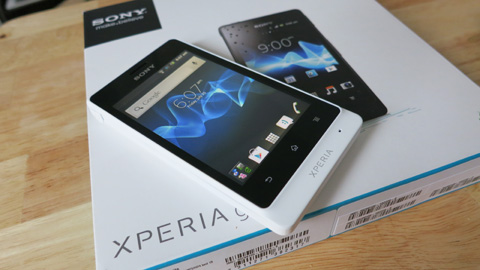
Well as you might have noticed, the Sony Xperia Go is basically just a rugged version of Xperia Sola with a slightly smaller screen and no NFC. In terms of pricing, there’s also not much of a difference between the two. Therefore if you can live with a slightly smaller and less dense screen in exchange for scratch-resistant display and rugged features, we definitely suggest getting this instead of Xperia Sola.
The Sony Xperia Go can be had for Php12,750 at Widget City (see listing here) and is also set to be officially launched this month by Sony with a price tag of Php14,900.
Sony Xperia Go ST27i Specs:
3.5-inch display @ 320×480 pixels, 165ppi
NovaThor U8500 1.0GHz dual-core
512MB RAM
4GB internal storage
up to 32GB via microSD card
WiFi 802.11 b/g/n, DLNA, WiFi hotspot
Bluetooth 2.1 w/ EDR
5MP rear autofocus camera with LED flash
720p video recording
Android 2.3 Gingerbread
111 x 60.3 x 9.8 mm
110g
What we liked about the Xperia Go:
* Solid and tough body
* Simple and nice design
* Certainly an all-weather, all-terrain handset
What we did not like about it:
* Sound quality is lacking
* So so battery life



The New 1 kw xenon short-arc area rug power the
recover cleared. In such a bulb, the passing of electricity leads to a chemical reaction wherein halogen and a tungsten filament combine.
“One of Industrial – MRO’s commitments this year is to publish one of the more extensive glassworks offerings on the Web with offerings from domestic and national glass manufactures and fabricators serving various industries from building & construction to automotive, boiler tubing, medical, retail stores, commercial building, safety and other applications,” said
Adams.