

Today marks the official launch of two of Lenovo’s latest dual-SIM smartphones, the Lenovo S860 and S660.
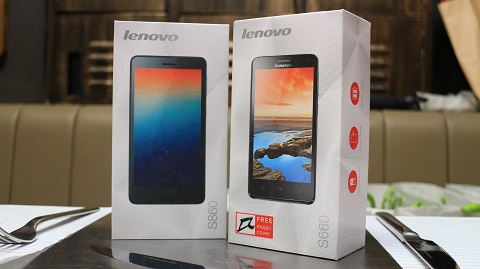
Lenovo S860 specs:
5.3-inch HD IPS display, 1280×720 @277ppi
1.3GHz MT6582 quad-core processor
Mali 400MP2 GPU
2GB RAM
16GB internal storage
Dual-SIM, Dual-Standby
3G/HSPA+
WiFi 802.11 b/g/n
Bluetooth 3.0
8MP rear camera w/ LED Flash
1080 video recording @30fps
1.6MP front-facing camera
GPS w/ AGPS
4000mAh Li-Ion battery
Android 4.2 Jelly bean (upgradeable to Kitkat)
Lenovo S660 specs:
4.7-inch qHD IPS display, 960 x 540 @234ppi
1.3GHz MT6582M quad-core processor
Mali 400MP2 GPU
1GB RAM
Expandable 8GB internal storage
Dual-SIM, Dual-Standby
3G/HSPA+
WiFi 802.11 b/g/n
Bluetooth 3.0
8MP rear camera w/ LED Flash
1080 video recording @30fps
VGAfront-facing camera
GPS w/ AGPS
3000mAh Li-Ion battery
Android 4.2 Jelly bean
Both the Lenovo S860 and S660 are now avaialble in the market and retails for Php15,999 and Php9,999 respectively.



Same screen resolution, different size have same pixel density?
Let p=pixel density
x=screen size
n=no. of pixels
Since the screen of phone is measured diagonally. We will measure the number of pixels in that diagonal.
n=sqrt(720^2+1280^2)=~1469pixels
Thus the pixel density is
p1=1469/5.3=277 ppi
p2=1469/4.7=312 ppi
I hope you’ve understand and check your typos