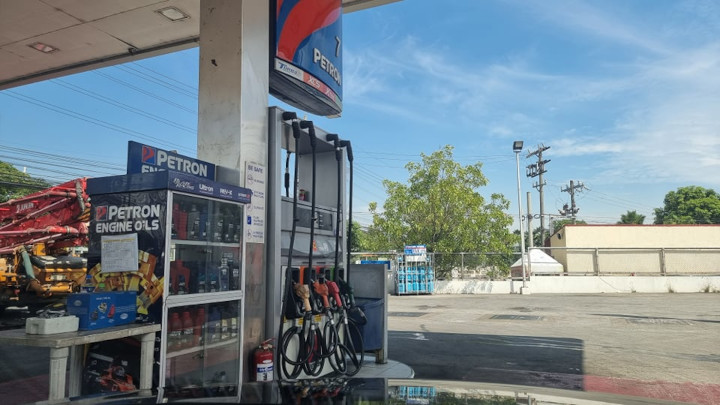

An adage goes, "In this world nothing can be said to be certain, except death and taxes." For that matter, excise tax is a form of indirect tax, a kind of taxation that is more difficult to evade than direct taxes such as income tax or property tax. One of the more relevant excise taxes in public consciousness today would be the fuel excise tax, which is imposed over different petroleum products, owing to rising oil prices in the Philippines and overseas. However, why would the Filipino government choose to ramp up subsidies instead of suspending fuel excise taxes altogether, despite a rising call for suspension even among national candidates for the 2022 election? Those in government, however, sees the potential effects of suspension from another perspective: the immediate relief expected from removing the fuel excise tax are likely to benefit the wealthier segments of society. Remember that the fuel excise tax is fixed after reaching its full implementation in 2020. Also, the fuel excise taxes in the United States are relatively smaller than in the Philippines: USD 0.18 per gallon (approximately PHP 10) for gasoline and USD 0.24 per gallon (approximately PHP 13) for diesel. Even if one were to deduct the fuel excise taxes, PHP 10 for gasoline and PHP 6 for diesel, the common prices for gasoline and diesel in the Philippines would have still been higher than it was in 2014, when global prices, or at least Dubai crude, were nearly in the same level - a difference of USD 3 per barrel between May 2014 and March 2022. Read more in our articles including "Why fuel excise taxes remain in the Philippines: equity or equality?" and "Fujifilm Instax Share SP-1 to hit stores in February".
An adage goes, “In this world nothing can be said to be certain, except death…
Mar 20, 2022Fujifilm’s Instax Share Smartphone Printer SP-1, will soon be available in the country starting next…
Jan 22, 2014Technology is slowly changing/improving the way we commute. In the past, we (commuters) are already…
Jul 8, 2012
Business laptops have come a long way from being simple tools for emails and spreadsheets.…
Jul 1, 2026
As someone who occasionally uses a laptop to work, one thing I sometimes wish for…
Jun 30, 2026
Coming in hot in the entry-level segment is the new Infinix HOT 70, and for…
Jun 25, 2026An adage goes, "In this world nothing can be said to be certain, except death and taxes." For that matter, excise tax is a form of indirect tax, a kind of taxation that is more difficult to evade than direct taxes such as income tax or property tax. One of the more relevant excise taxes in public consciousness today would be the fuel excise tax, which is imposed over different petroleum products, owing to rising oil prices in the Philippines and overseas.
However, why would the Filipino government choose to ramp up subsidies instead of suspending fuel excise taxes altogether, despite a rising call for suspension even among national candidates for the 2022 election? Those in government, however, sees the potential effects of suspension from another perspective: the immediate relief expected from removing the fuel excise tax are likely to benefit the wealthier segments of society. Remember that the fuel excise tax is fixed after reaching its full implementation in 2020.
Our coverage of excise tax explained includes: "Why fuel excise taxes remain in the Philippines: equity or equality?"; "Fujifilm Instax Share SP-1 to hit stores in February"; "Davao taxis now accept fare payments via on-board ATM". Each article provides unique insights and information.