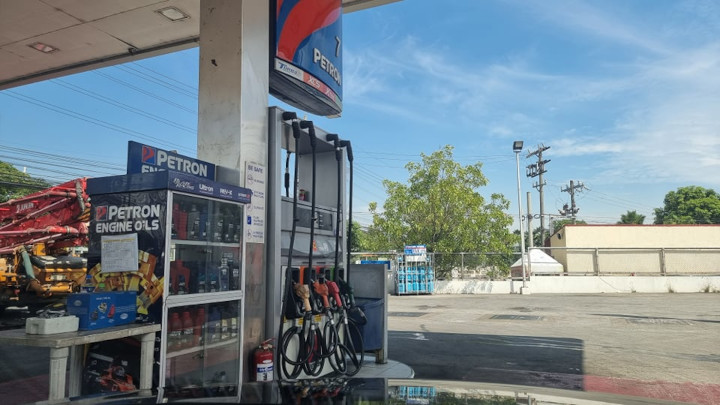

One of the more relevant excise taxes in public consciousness today would be the fuel excise tax, which is imposed over different petroleum products, owing to rising oil prices in the Philippines and overseas. However, why would the Filipino government choose to ramp up subsidies instead of suspending fuel excise taxes altogether, despite a rising call for suspension even among national candidates for the 2022 election? Such issues are not confined only in institutionalized programs, but also in stopgap measures like the fuel subsidy. Those in government, however, sees the potential effects of suspension from another perspective: the immediate relief expected from removing the fuel excise tax are likely to benefit the wealthier segments of society. The DOF argument rests on data indicating that the top 10 percent of Filipino households constitute around 49 percent of the nation's total fuel consumption. Consider the disparity in purchasing power, and in extension, fuel consumption. Remember that the fuel excise tax is fixed after reaching its full implementation in 2020. Depending on how global oil prices would hold for the rest of the year, the fuel VAT could increase between PHP 20.3 billion (at USD 100 per barrel) to PHP 37.5 billion (at USD 130 per barrel). Read more in our articles including "Why fuel excise taxes remain in the Philippines: equity or equality?" and "See more, do more with BenQ’s new monitors".
An adage goes, “In this world nothing can be said to be certain, except death…
Mar 20, 2022
As someone who occasionally uses a laptop to work, one thing I sometimes wish for…
Jun 30, 2026
Coming in hot in the entry-level segment is the new Infinix HOT 70, and for…
Jun 25, 2026
The TECNO POVA Curve 2 5G has arrived. It’s a slim, lightweight phone, and yet…
Jun 12, 2026
Everything Apple Announced at WWDC 2026: New Siri AI, iOS 27, macOS Golden Gate, and…
Jun 9, 2026
When it comes to OPPO’s budget-friendly options, it’s hard to beat what the new A6…
May 16, 2026One of the more relevant excise taxes in public consciousness today would be the fuel excise tax, which is imposed over different petroleum products, owing to rising oil prices in the Philippines and overseas. However, why would the Filipino government choose to ramp up subsidies instead of suspending fuel excise taxes altogether, despite a rising call for suspension even among national candidates for the 2022 election?
Such issues are not confined only in institutionalized programs, but also in stopgap measures like the fuel subsidy. Those in government, however, sees the potential effects of suspension from another perspective: the immediate relief expected from removing the fuel excise tax are likely to benefit the wealthier segments of society. The DOF argument rests on data indicating that the top 10 percent of Filipino households constitute around 49 percent of the nation's total fuel consumption.
Our coverage of fuel subsidy includes: "Why fuel excise taxes remain in the Philippines: equity or equality?"; "See more, do more with BenQ’s new monitors"; "Infinix HOT 70: Coming in HOT Under P8,000!". Each article provides unique insights and information.