Samsung SDI is reportedly testing a massive dual-cell silicon-carbon (Si/C) battery with a combined capacity of 20,000mAh, signaling early efforts to dramatically increase battery sizes for future smartphones and portable devices.
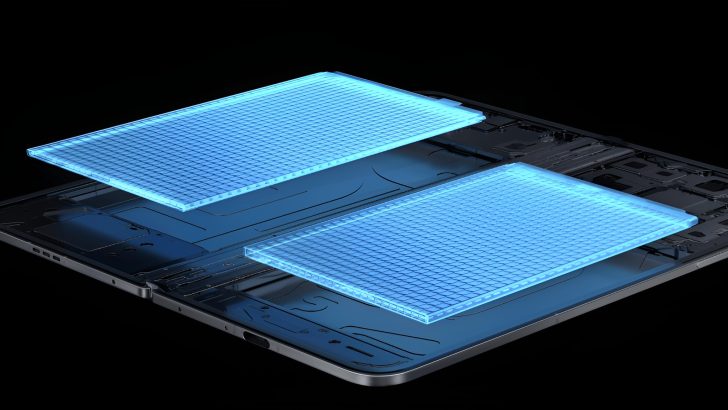
According to information shared by industry tipsters, the experimental battery design consists of two cells: a primary 12,000mAh cell measuring about 6.3mm thick, and a secondary 8,000mAh cell with a thickness of roughly 4mm. Together, the setup delivers an unprecedented capacity compared to current flagship smartphones, which typically hover around the 5,000mAh mark.
Silicon-carbon batteries differ from conventional lithium-ion batteries by using a silicon-based anode instead of graphite. This allows the anode to store significantly more lithium ions potentially up to ten times more, enabling much higher energy density without drastically increasing battery size. This technology has already been adopted by several Chinese smartphone brands, some of which now ship devices with batteries exceeding 10,000mAh.
However, the technology is not yet ready for mass deployment at Samsung. Reports indicate that the smaller 8,000mAh cell experienced severe swelling up to 80 percent during testing, highlighting one of the biggest challenges facing silicon-carbon batteries. Silicon anodes are prone to expansion during charging cycles, which can compromise safety, longevity, and structural integrity.
Because of these issues, the dual-cell 20,000mAh battery remains firmly in the experimental stage, with no clear timeline for commercial use. As a result, Samsung is expected to continue using conventional lithium-ion batteries for its near-term flagship devices, including the upcoming Galaxy S26 Ultra, which is still rumored to retain a battery capacity of around 5,000mAh.
While the test underscores Samsung SDI’s long-term ambitions in next-generation battery technology, significant engineering hurdles remain before such high-capacity silicon-carbon batteries can safely reach consumer smartphones.
Frequently Asked Questions
What is the total capacity of the experimental Samsung SDI battery?+
The experimental battery has a combined capacity of 20,000mAh from two cells.
How does a silicon-carbon battery differ from a conventional lithium-ion battery?+
It uses a silicon-based anode instead of graphite, allowing it to store up to ten times more lithium ions.
What problem did the 8,000mAh cell experience during testing?+
The cell experienced severe swelling up to 80 percent during testing.
Anton is into technology and gaming, with a growing interest in creative, tech-driven projects. He enjoys writing, editing, and experimenting with new tools, always learning and improving as he goes. Curious by nature, he likes building ideas, testing things out, and seeing where they lead.








0 Comments
Leave a Reply