

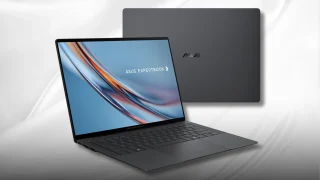
After scouring the halls of the 2012 Computex, I think it is safe to say that Asus has once again created a unique idea for a product with the Taichi. Not that we’re saying it’s a brilliant idea but it is an implementation we have not seen anywhere else on the floors of Computex.
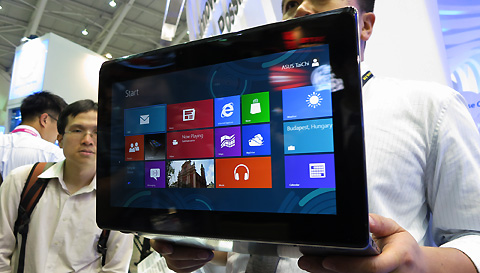
However, the question that’s keep on popping in our heads as our media delegation repeatedly talked about the Taichi is — “does it have a practical use?”.
To get a better perspective on how the Asus Taichi looks, check out this very short video of the dual-screen running Windows 8:
The idea of having a dual-screen back-to-back might seem attractive to some and awe-inspiring to others, but regular folks would ask how they will use this tablet in real-world scenarios.
The Taichi can support two simultaneous tasks at the same time — like typing a letter in MS Word while your sister or daughter ca use the screen at the back o the lid to play some games.
In some occasions, if you are doing a PowerPoint presentation, you can actually replicate the view for both screens enabling you to show what you’re doing without rotating the laptop around.
Lastly, since the Taichi is powered by the latest Intel Core i7 Ivy Bridge processor, you can do heavy-duty stuff on the ultrabook (like editing an HD video on Adobe Premiere) and then closing the lid of the laptop to only show the touchscreen tablet playing the final HD video.
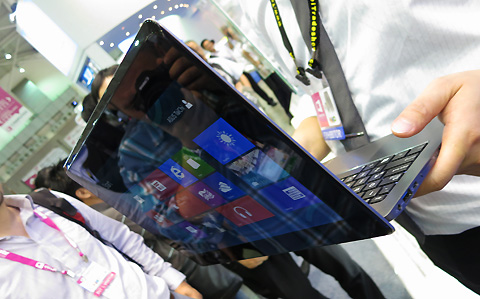
But then again, those are isolated cases and one might add that either one of the two will end up being under-utilized (my bet it’s the tablet).
In any case, it could also be something people look at as a “nice-to-have-but-not-really-needed”. Actually, I think it will all boil down to the retail price.
Again, here’s what you will be getting…
Asus Taichi specs:
11.6″ and 13.3″ IPS LCD full HD display @ 1920×1080 pixels
Intel Core i7 Ivy Bridge processor
Intel HD 4000 graphics
4GB DDR3 RAM
128GB, 256GB SSD
WiFi 802.11 b/g/n
Bluetooth
USB 3.0
Windows 8
Asus did not mention anything about the battery life (I asked one of the Product Managers and they said once Windows 8 is out they can do the standard battery test to measure this).
As for the price, what’s being floated around (and this came from one of the Asus reps I talked to) is in the Php60k and upwards.



“nice-to-have-but-not-really-neededâ€
Parang macbook na pangfacebook lang ng karamihan ng bumibili.