

The SD Association has just announced the next-generation compact storage cards called SD Express, aiming to bring great speeds at a small package. Announced at the ongoing Mobile World Congress in Shanghai, the new technology brings in PCI Express and NVMe speeds in a smaller form, thus achieving maximum data transmission speeds of up to 985 megabytes per second (MB/s). In comparison, the current SDXC UHS-III cards can only attain a maximum of 624MB/s, and the same can be said with most SSDs on SATA-III connection are slower than the SD Express. With a faster data transmission rate, the new SD Express standard will allow users not only to transfer large amounts of data quickly but also process it in real time, including more comprehensive RAW files, 360-degree content, or even Augmented and Virtual Reality. These also use less power compared to other SD cards and is backwards compatible, which is a plus. “With SD Express we’re offering an entirely new level of a memory card with faster protocols turning cards into a removable SSD,” said Hiroyuki Sakamoto, SDA president. “SD 7.0 delivers revolutionary innovations to anticipate the needs of forthcoming devices and content rich and speed hungry applications.” The new SD Express cards will be marked with an EX I symbol on the card body and can range from your usual 2 or 4GB to a whopping 128TB with the newly-created SDUC (SD Ultra-Capacity) standard. Read more in our articles including "SD Express brings PCI Express and NVMe speeds in a compact package" and "Sony to end physical PlayStation Game Discs for new releases in 2028".

The SD Association has just announced the next-generation compact storage cards called SD Express, aiming…
Jun 29, 2018
Sony Interactive Entertainment has announced that all new PlayStation games released from January 2028 onward…
Jul 5, 2026
GCash has reduced its InstaPay bank transfer fee from PHP 15 to PHP 10, effective…
Jul 5, 2026Owners of FlowersExpress.com.ph should tell their internet marketing / SEO people to stop using outdated…
Dec 12, 2008I’ve been an avid fan of the Moo cards ever since they went online. The…
Jul 22, 2008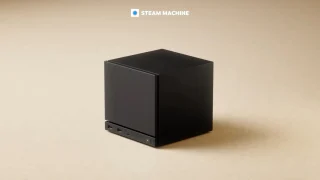
The Steam Machine 512GB with Steam Controller is now available for pre-order in the Philippines…
Jul 4, 2026The SD Association has just announced the next-generation compact storage cards called SD Express, aiming to bring great speeds at a small package. Announced at the ongoing Mobile World Congress in Shanghai, the new technology brings in PCI Express and NVMe speeds in a smaller form, thus achieving maximum data transmission speeds of up to 985 megabytes per second (MB/s).
In comparison, the current SDXC UHS-III cards can only attain a maximum of 624MB/s, and the same can be said with most SSDs on SATA-III connection are slower than the SD Express. With a faster data transmission rate, the new SD Express standard will allow users not only to transfer large amounts of data quickly but also process it in real time, including more comprehensive RAW files, 360-degree content, or even Augmented and Virtual Reality. These also use less power compared to other SD cards and is backwards compatible, which is a plus.
Our coverage of SD Express Cards includes: "SD Express brings PCI Express and NVMe speeds in a compact package"; "Sony to end physical PlayStation Game Discs for new releases in 2028"; "GCash cuts InstaPay bank transfer fee from PHP 15 to PHP 10". Each article provides unique insights and information.