

The HTC One S completes our whole line-up of the HTC One series, a new breed of HTC handsets that is supposed to revive the company’s sexy status once again. Check out our full review after the break.
When we first used the HTC One X, we immediately fell in love with it. The same can almost be said with the HTC One S. We recommend you reading up on our HTC One X review first before reading any further.
Design & Construction
The fluid design of the One S is very similar to the One X that came with a slightly curved body and smooth, matte finish. At only 7.8mm thick, it’s the thinnest smartphone we’ve ever tried and tested (matched only by the Droid Razr).
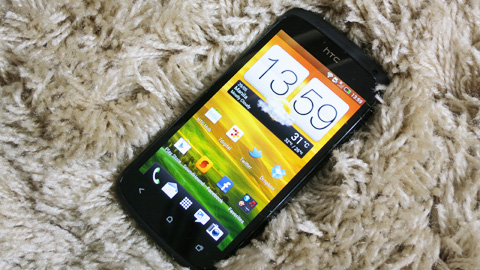
The polycarbonate body feels solid and despite its very thin frame, it’s got a bit of heft to it. The chassis designs gives it a unibody look but a small section of the back (where the camera is housed) can actually be peeled off to expose the microSIM card slot.
The power button is found on the top right side with the 3.5mm audio jack right across it. The volume rocker is found on the right side while the micro-USB port is on the left side. A small pinhole is found at the bottom end which is dedicated to the microphone.
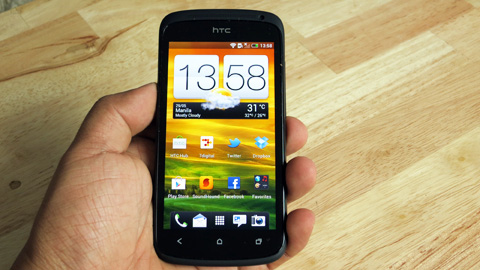
Up in front is a large slab of polished glass that covers almost the entire front panel where the sides reach out towards the edges, giving it an “infinity-pool” effect. The corners of the slab of glass is also rounded following the curves of the handset itself. This symmetry gave the One S a really beautiful, fluid construction.
At the bottom end are the soft buttons etched behind the glass display; they’re already designed for Ice Cream Sandwich (Back, Home, Recent Apps).

Display
The HTC One S uses a Super AMOLED display that’s packed with 280 pixels per inch into a 4.3-inch panel protected by Gorilla Glass. The screen resolution isn’t in the HD territory yet but the image quality, crispness and clarity of the display is very evident. This is about 20% lower in pixel density compared to the One X, but the colors are generally more saturated, warmer and brighter.

Video playback is superb and viewing angles are very wide. Outdoor viewing is a bit challenging because of the glare but the One S manages to cope up in some occasions.
The glass panel is prone to fingerprints and smudges but that’s pretty much expected of any handset nowadays. The dark glass panel with its infinity screen gives the perception that the display is larger than it actually is.
AMOLED screens are very well known for their impressive contrasts and the one in the HTC One S is no exception.
Multimedia & Camera
The multimedia features of the One S reminds us of the time when HTC started doing the Beats Audio integration with their handsets — starting with the Sensation XE. Both the stock music player and the video players can handle most of the common file formats you throw at it.
The speakers can belt out decent sound but once you plug in an earphone, you can activate the sound enhancer and the Beats Audio. The player also comes with SoundHound built into it so you can actually figure out the unnamed song you’re playing.

The 8-megapixel camera on the HTC One S performed as good as its big-brother, the One X. The camera shoots really fast (around 2 or 3 shots per second) and the images are refined and well-saturated.
[fancygallery ID=”htcones”]
Also notice that some of the shots here have effects or went thru special filters. They are actually built-in filters from the camera app which you can directly apply to the subjects you shoot. This should be really useful to lots of Instagram users.
Video recording is really good even at 1080p and thought there seems to be very little dropped frames, the recording rate is only at 24fps so you may notice some jumpy shots once in a while
The color saturation is cranked up a bit but the auto white balance and exposure correction seems to be doing just fine.
OS & UI
HTC has been known for creating the popular HTC Sense UI and it has gone a long way to make it more intuitive, smoother and with all the added eye-candy and animations. This is overlaid on top of Android 4.0.3 ICS so you’ll really never see any semblance of the stock Android UI.


HTC banked heavily on the Sense UI to differentiate itself from other Android devices. As such, you get a slew of personalization options — from the HTC Scene, to the Skins, Lock Screen Style, up to the organization of the Home Screen with all the HTC goodies and widgets that come with it.
The Recent Apps screen shows a deck of windows or running apps and you can actually close these apps by swiping the windows upwards.


The on-screen qwerty keyboard takes up the entire width of the bottom corner of the screen giving more space for each individual keys. The keys are spaced too close to each other and is a little mis-proportioned (keys are very tall but thin).
Performance & Benchmarks
The HTC One S is one of the most powerful smartphones we’ve ever reviewed to date. Even with just a dual-core processor, the handset went beyond expectations as shown in our benchmark tests.


Quadrant Standard is a very high 4,992 while Antutu Benchmark gave it a 6896 score which is pretty good as well.

The 60.7fps rating by Nenamark 2 is also very impressive and probably the highest we’ve ever seen on this benchmark.
Call Quality & Battery Life
The HTC One S only comes with a 1650mAh Li-Po battery. The relatively low-rated battery is certainly a huge factor on the battery life of the handset. On moderate to normal use, the handset lasts for about a day. We noticed though that, most of the time, you’ll have to recharge the battery by the end of the day. That’s casual use on Twitter, FourSquare and Facebook, plus a little bit of browser on the side.

What made it worse is that the battery of the One S is not user-replaceable so you’re stuck with the poor battery performance until you bring it to a service center for replacement.
The polycarbonate material used in the chassis of the One S minimizes interference and based on several calls we’ve made the audio quality and signal reception very clear. We’ve never experienced any dropped calls and the one time we have a bit of problem, it was the other party that was at fault.
Conclusion
The HTC One S combines both beauty and power in a single sexy device. It’s practically the slimmest phone we’ve ever reviewed and among the most powerful smartphones to date.
Two of the biggest qualms we have with the device is the lack of storage expansion (microUSB) and the low-rated, built-in battery. Everything else is just pure joy.

The HTC One S is not yet officially released in the Philippines but it retails for about Php23,950 over at Widget City (see listing here).
HTC One S specs:
4.3″ Super AMOLED display @ 540×960 pixels, 280ppi
Corning Gorilla Glass
Dual-core 1.5GHz Krait processor
Qualcomm MSM8960 Snapdragon S4
Adreno 225
1GB RAM
16GB internal storage
HSPA+ 21Mbps
WiFi 802.11 b/g/n
Bluetooth 4.0
8MP autofocus rear camera w/ LED flash
1080p video recording @ 30fps
1.3MP front-facing camera, 720p video
GPS w/ aGPS support
Beats Audio
1650mAh Li-Polymer battery
Android 4.0 ICS
119.5 grams (weight)
130.9 x 65 x 7.8mm (dimension)
Php23,950 (street price)
What we liked about it.
â— Sleek handset design
â— Powerful Snapdragon S4 processor
â— Brilliant HD screen
â— Great camera
What we did not like.
â— Poor battery life, non-removable battery
â— Limited storage, no expandable memory slot

Beautiful Indonesia